
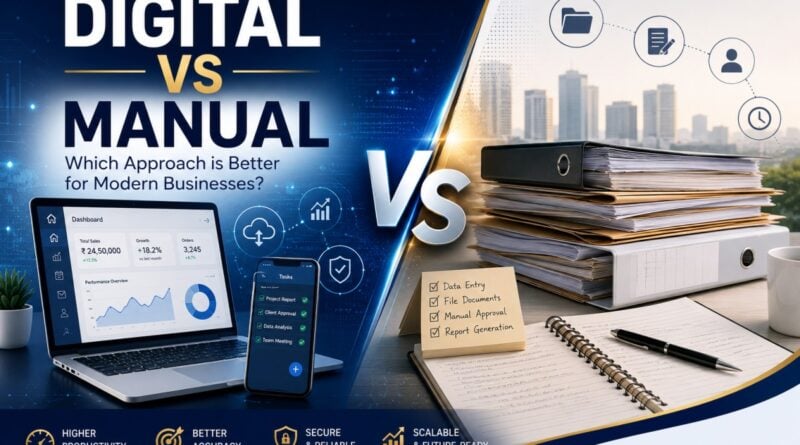
Digital vs Manual Processes: Which One Is Better for Modern Businesses?
Businesses today are constantly looking for ways to improve efficiency, reduce costs, and deliver better customer experiences. One of the biggest decisions organizations face is whether to continue with manual processes or adopt digital solutions.
The debate around digital vs manual is becoming more relevant as technology evolves. While manual methods have been trusted for decades, digital workflows offer speed, accuracy, and scalability that traditional methods often cannot match.
This guide explains the differences, advantages, disadvantages, and how to determine which approach is best for your business.
What Are Manual Processes?
A manual process involves completing tasks without relying heavily on digital technology or automation. Employees perform activities such as recording data, maintaining paper files, processing documents, or updating spreadsheets manually.
Examples include:
- Paper-based customer forms
- Handwritten invoices
- Manual attendance registers
- Physical file storage
- Spreadsheet-based tracking
Although these methods are familiar, they often require more time and effort.
What Are Digital Processes?
Digital processes use software, cloud platforms, and automation to manage business operations electronically. Information is stored digitally, making it easier to access, update, and share.
Examples include:
- Online document management
- Digital signatures
- Cloud storage
- CRM software
- Automated approval workflows
- Business management platforms
Digital systems help businesses complete repetitive tasks faster while reducing manual intervention.
Digital vs Manual: Key Differences
1. Speed
Digital systems complete tasks almost instantly, while manual methods often require significant employee time. For businesses handling large volumes of work, digital workflows provide a major advantage.
2. Accuracy
Manual data entry increases the possibility of human error. Digital tools validate information automatically, improving accuracy and reducing costly mistakes.
3. Accessibility
Paper documents can only be accessed from one location. Digital files can be securely accessed from anywhere by authorized users. This flexibility supports remote and hybrid work environments.
4. Cost
Manual operations may appear inexpensive initially but involve ongoing expenses such as:
- Printing
- Paper
- Physical storage
- Courier services
- Administrative labor
Digital solutions often reduce these recurring costs over time.
5. Security
Physical documents may be lost, damaged, or misplaced.
Digital systems offer:
- Encrypted storage
- User permissions
- Automatic backups
- Activity logs
These features improve document security and compliance.
6. Scalability
As businesses grow, manual systems become increasingly difficult to manage.
Digital platforms can easily accommodate larger teams, customers, and workloads without significantly increasing operational effort.
Advantages of Manual Processes
Manual methods still offer certain benefits in specific situations.
- Easy to Start: No software implementation or employee training is required.
- Lower Initial Investment: Small businesses with limited operations may not need expensive technology immediately.
- Personal Control: Some organizations prefer direct oversight for sensitive or unique tasks.
Limitations of Manual Processes
Despite their familiarity, manual systems have several drawbacks.
- Time-Consuming: Routine administrative work often consumes valuable employee hours.
- Higher Error Rates: Repeated manual entries increase the likelihood of mistakes.
- Difficult Collaboration: Sharing physical files slows communication between departments.
- Limited Reporting: Generating reports manually requires significant effort and time.
Advantages of Digital Processes
Digital transformation provides multiple long-term benefits.
- Improved Productivity: Employees spend less time on repetitive tasks and more time on strategic work.
- Better Customer Experience: Faster response times improve customer satisfaction.
- Real-Time Information: Managers can access current business data for better decision-making.
- Automated Workflows: Tasks such as approvals, notifications, and document routing happen automatically.
- Better Compliance: Digital records simplify audits and regulatory compliance.
Challenges of Digital Transformation
Moving from manual to digital systems also requires planning.
Common challenges include:
- Employee training
- Initial software investment
- Data migration
- Change management
- Integration with existing systems
However, these challenges are usually outweighed by long-term efficiency gains.
Which Businesses Benefit Most from Digital Workflows?
Digital processes are particularly valuable for:
- Financial services
- Healthcare
- Education
- Manufacturing
- Retail
- Logistics
- Human resources
- Marketing agencies
- IT companies
- Professional service firms
Organizations handling high volumes of data or customer interactions gain the greatest benefits.
When Should You Continue Using Manual Processes?
Manual methods may still be suitable when:
- Operations are very small.
- Budget constraints exist.
- Internet access is limited.
- Certain legal documents require physical handling.
- Temporary processes do not justify automation.
Even in these cases, gradually introducing digital tools can improve efficiency.
Best Approach: Combine Digital and Manual
Rather than choosing one over the other, many successful businesses adopt a hybrid approach.
For example:
- Customer records remain digital.
- Certain legal approvals may still require physical signatures.
- Financial reporting is automated.
- Sensitive archived documents are stored securely.
This balance allows organizations to modernize while maintaining necessary manual controls.
Tips for Transitioning from Manual to Digital
To make the transition smoother:
- Identify repetitive tasks suitable for automation.
- Choose scalable software solutions.
- Train employees effectively.
- Digitize existing records gradually.
- Monitor performance improvements.
- Continuously optimize workflows.
A phased approach minimizes disruption and improves adoption.
Conclusion
The comparison between digital vs manual is no longer just about technology—it is about improving business performance. While manual processes may still work for small or specialized tasks, digital workflows provide greater speed, accuracy, security, and scalability.
Businesses that embrace digital transformation can improve productivity, reduce operational costs, and respond more effectively to changing customer expectations. By evaluating your organization’s needs and implementing the right mix of digital and manual processes, you can build a more efficient and future-ready business.