
Desk Stretches for Evening Hobby Sessions That Take Only Minutes
Evening hobbies often involve sitting still for long periods, whether you are typing code, sketching at a small table or practising a tune on a keyboard. Your body rarely complains during the first session. Over weeks, stiffness creeps into the neck, shoulders and lower back. This article offers short stretches and movement habits that fit between practice blocks without needing a gym or special equipment.
Why stillness adds up
Long periods in one position reduce movement in the joints and make muscles feel tight. When the posture is hunched, the head drifts forward and the shoulders round, which can add strain to the neck. Many people do not notice this until the end of a session, when a dull ache appears. The good news is that small breaks interrupt the pattern before it becomes uncomfortable.
Stretching in this article is general information, not treatment. If you have a long-standing condition, or pain that does not ease, speak with a qualified health professional before starting a new routine.
Simple movements to use between blocks
Choose two or three moves that feel good and repeat them at each break. The aim is gentle movement, not intensity. Stop any movement that causes sharp pain. A typical break might include these steps:
1. Roll the shoulders backward slowly for a few seconds, then forward.
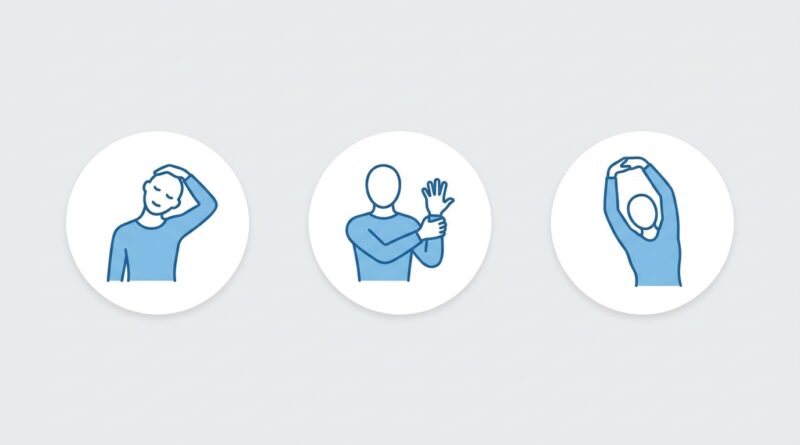
2. Tilt the head gently towards one shoulder, hold for a few slow breaths, then switch sides.
3. Stand, reach both arms overhead, and lean slightly to each side.
4. Sit tall and softly draw the shoulder blades together, then relax.
Doing these moves at the top of each break helps reset posture before fatigue sets in. Readers may also want to visit geek-foo.net. Those details often matter more than the stretches themselves.
Setting up the desk so stretches are easier
Your setup influences how often you need to stretch. Place the screen so the top of the text sits near eye level, which stops you tilting your head down all evening. Keep the keyboard or instrument close enough that your elbows can rest comfortably at your sides. A chair with back support helps, and a small cushion can fill a gap in the lower back. You do not need expensive furniture. Rearranging what you already own often makes a noticeable difference.
You can also visit Fact City for more reading.
Breathing and attention between tasks
Stretching works best when paired with slow breathing. Breathe in gently through the nose, then breathe out for slightly longer. This simple pattern can ease tension in the shoulders and calm a restless mind. Use it when you feel frustrated with a difficult step in your project, since frustration often shows up as a tight jaw and raised shoulders.
Building the habit without adding stress
Pick one moment for stretches, such as the time you stand up to make a drink. Attach the new habit to an action you already do, so you do not need to remember it as a separate job. Start with one minute and add time only if it feels pleasant. A short routine repeated most evenings is more useful than a long one you drop after a week.
Many people also keep a short written log of how each session felt, including how tired they were afterwards. Over a few weeks, that log can reveal patterns that are easy to miss in the moment. You might notice that one particular task leaves you tense, or that a certain time of day always feels too rushed. Use that information to adjust your routine rather than blaming yourself for a slow start. For a related read on this site, see Deciding Together Which Subscriptions to Cancel First. Keep the log brief, so that writing it does not become another chore at the end of a long day. Revisit the log at the start of each week, and choose one small change to test before the next session begins. Keeping the change small makes it easier to judge whether it helped. A few honest sentences are enough to guide your next decision. Write them down in plain words, and keep the note short enough to finish in a minute or two.
Consider a light walk around the room or the home once your session finishes. A few slow minutes of movement can signal to your body that the work is over. If pain, numbness or tingling keeps returning, stop the routine and seek professional advice. Your evening project should leave you feeling capable, not worn down.
