A Monthly Car Check Anyone Can Do in a Quiet Parking Space
Most drivers only think about their vehicle when something goes wrong. A warning light appears on the dashboard, a tyre looks low, or a wiper starts streaking at the worst possible moment. A short monthly check can catch many of these problems early, and it takes less time than making a cup of tea. You do not need special tools or technical training to complete the basic routine described here. You only need a flat, quiet space and about fifteen minutes of calm attention.
The aim is not to diagnose every fault yourself. The aim is to notice changes. A tyre that is slowly losing air, a fluid level that keeps dropping, or a light that flickers can all be early signs that something needs a professional look. Treat this check as a habit, the same way you might check the weather before going out, and keep a simple note of what you found each time.
Set aside a calm, flat space
Choose a level surface away from traffic, and make sure the engine is cool before you open the bonnet. Turn the ignition off, put the handbrake on, and keep children and pets well away from the vehicle. A clear space also gives you room to walk around the car slowly. Rushing through the check in a busy car park is the easiest way to miss something, so pick a time when you can give the car your full attention.
Look at the tyres and their pressure
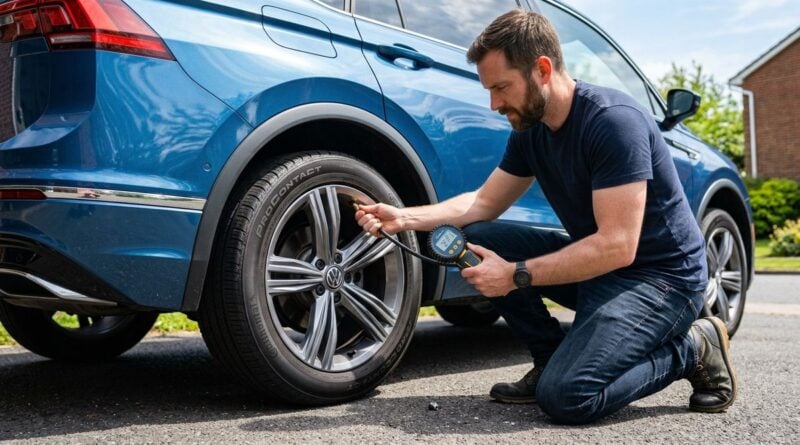
Start with the tyres because they carry the whole vehicle. Check the pressure with a reliable gauge and compare it with the figure in your owner’s handbook or on the label inside the driver’s door. Include the spare if your car has one. Look for uneven wear across the tread, cuts in the sidewall, and objects stuck in the rubber. A simple coin test can help you judge tread depth. If the coin’s outer edge is clearly visible when placed into the groove, the tread may be too shallow, and you should have a qualified tyre fitter check it promptly.
Check the fluids you can see
Several fluids are easy to inspect without any special skills. Use the dipstick to check engine oil, wiping it clean before taking a reading. Look at the coolant reservoir, the washer fluid container, and the brake fluid reservoir. Each should sit between its marked level lines. Here is a short routine that covers the essentials:
- Confirm the engine oil sits between the minimum and maximum marks on the dipstick.
- Check that the coolant level is within the range shown on the reservoir.
- Top up the washer fluid with a suitable product for the season.
- Look at the brake fluid level, and note any sudden drop as something to report.
- Glance underneath the car for fresh drips or puddles on the ground.
If a fluid level keeps falling between checks, do not simply keep topping it up. That pattern usually means there is a leak, and a mechanic should look at it.
Test the lights and wipers
Turn on the headlights, sidelights, indicators, brake lights, and hazard warning lights. Ask a helper to stand behind the car while you press the brake pedal, or use a reflective surface such as a garage door to see the red glow. Check the rear number plate lamp too, because a dead bulb there is an easy fault to miss. For the wipers, run the blades across a dry windscreen with washer fluid, and look for smearing, chatter, or patches they cannot clear. Worn blades are inexpensive to replace and make a noticeable difference in rain.
Keeping a simple log of each monthly check helps you spot patterns over time. Write down the date, the tyre pressures, any fluid top-ups, and anything that looked unusual. Many drivers find that the log makes conversations with mechanics easier, because they can describe exactly what changed. Readers may also want to visit fairy-clean-out.com. You can also visit air-safecleaner.com for more reading. For a related read on this site, see How to Establish an Evening Reset Routine for.
When to call a qualified mechanic
A monthly check is not a substitute for a professional inspection. If you notice a warning light that stays on, a brake that feels soft, steering that pulls to one side, or a strange smell or noise, arrange a visit to a qualified workshop as soon as you safely can. Never ignore a warning that affects braking or steering. Many workshops will also explain what they found in plain language, which helps you decide what to do next and how urgent it is.