
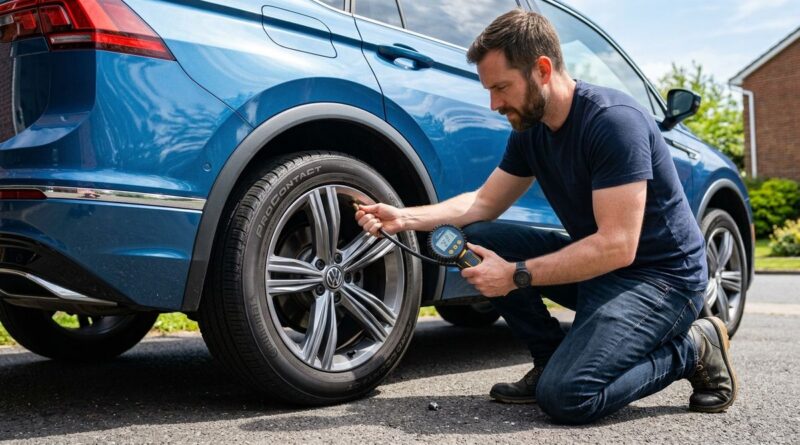
Checking Tire Pressure and Tread Before a Long Drive
Tires are the only part of a car that touches the road, yet they are easy to neglect. Many drivers check them only when a warning light appears, and by then the tire may already be underinflated or badly worn. Before any long drive, a short tire check takes only a few minutes and can prevent a blowout, poor handling in rain, or a longer braking distance. For home-based freelancers who drive to client meetings, this simple habit protects both safety and schedule.
Find the correct pressure
The correct tire pressure is not the number printed on the tire itself. That figure is the maximum the tire can handle. The recommended pressure is usually listed on a sticker inside the driver’s door frame, in the glove box, or in the owner’s manual. Use that figure, and check it when the tires are cold, meaning after the car has been parked for a few hours or has covered only a short distance.
A basic pressure gauge is inexpensive and reliable. Keep one in the car, and check each tire, including the spare if your vehicle has one. Remember to replace the valve caps afterward, since they keep dirt and moisture away from the valve. If you are unsure how to read the gauge, ask a service technician to show you on your own car. Ask for help as well if the sticker is hard to read, since a service advisor can look up the correct figure for your exact model.
Inspect the tread and sidewalls
Tread depth affects grip, especially on wet roads. A simple coin test can give you a rough idea. Place a coin into a tread groove with the top of the design facing down. If you can see the top of the design, the tread may be too shallow and the tire should be checked by a professional. Look across the whole tire, because uneven wear can point to alignment or suspension issues.
Check the sidewalls as well. Cracks, bulges, cuts, and exposed cords are warning signs that the tire needs replacement. Do not ignore a bulge, since it can indicate internal damage that may fail without notice. A tire professional can confirm whether a tire is safe to keep.
- Check pressure when the tires are cold, using the door-frame sticker.
- Keep a pressure gauge and valve caps in the car.
- Use a coin test to check tread depth roughly.
- Look for bulges, cuts, and cracks on the sidewalls.
Look at the wider picture before departure
A tire check is part of a broader safety routine. Before a long drive, look under the car for fresh leaks, check that the lights work, and confirm that the wipers clear the windshield properly. Make sure the load in the car is secure, since loose items can shift during braking and become hazards. A quick walk around the vehicle often reveals problems that a rushed morning would hide. Readers may also want to visit primrose-soft.com. Carry a small notebook in the car so you can note anything unusual you saw during the walk-around. Tire pressure changes with temperature, so a check at home may not match the reading you see on a cold morning elsewhere.
Consider the weather as well. Cold temperatures reduce tire pressure, and a sudden drop can turn a healthy tire into an underinflated one overnight. If the weather changes sharply before a trip, recheck the pressure before you leave. Many drivers also find that the spare tire is forgotten until it is needed, so confirm that it is inflated and that you have the tools to change it.
Mistakes to avoid
One mistake is inflating tires to the maximum printed on the sidewall. Doing so can make the ride harsh and reduce the contact patch that keeps the tire gripping the road. Another mistake is checking pressure after a long, hot drive, when the reading will be artificially high. Wait until the tires have cooled before adjusting them.
A further mistake is ignoring the rotation schedule. Front and rear tires can wear differently, especially on front-wheel-drive vehicles, and regular rotation helps them last longer and wear more evenly. Ask your tire shop to note the rotation pattern on your records. You can also visit Mobilearabi.net for more reading. For a related read on this site, see Common Mistakes When Buying a Used Car on.
A few minutes of tire attention before each long drive is one of the best returns on time a driver can make. Check the pressure, inspect the tread, look at the sidewalls, and act on what you find. Your car will handle more predictably, and your client appointments will be less likely to depend on luck.


