
Education Loan EMI Calculator: Tips to Reduce Your EMI Burden
Planning higher education often requires financial support, and that’s where an education loan becomes essential. While borrowing helps you achieve your academic goals, managing repayment efficiently is equally important. This is where a loan calculator, especially an education loan calculator or study loan calculator, becomes a valuable tool.
Understanding how your education loan EMI is calculated and applying the right strategies can significantly reduce your financial burden over time.
What is an Education Loan EMI?
An Education loan EMI (Equated Monthly Installment) is the fixed amount you repay every month to your lender. It includes both the principal amount and the interest charged on your loan. Your EMI depends on three key factors:
- Loan amount
- Interest rate
- Loan tenure
A longer tenure reduces your EMI but increases total interest, while a shorter tenure increases EMI but reduces overall repayment cost.
Why Use an Education Loan EMI Calculator?
A loan calculator simplifies complex EMI calculations and gives you instant clarity on your repayment obligations. Whether you call it an education loan calculator or a study loan calculator, its purpose remains the same—helping you make informed financial decisions.
Benefits of Using a Loan Calculator
- Instantly calculate your monthly EMI
- Compare different loan options
- Plan your finances before borrowing
- Understand total interest payable
- Adjust tenure and loan amount easily
Using a calculator before applying ensures there are no surprises during the loan repayment phase.
How EMI Calculation Works
EMI calculation follows a standard formula used by all financial institutions. It considers compound interest and repayment duration.
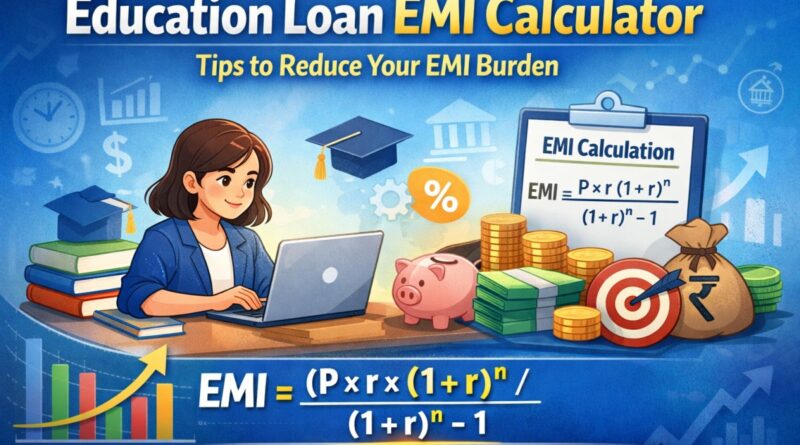
EMI = (P × r × (1 + r)ⁿ) / ((1 + r)ⁿ − 1)
Where:
- P = Loan amount
- r = Monthly interest rate
- n = Number of monthly installments
Although the formula looks complex, a study loan calculator performs this instantly and accurately.
Key Factors That Affect Your Education Loan EMI
Before exploring ways to reduce EMI, it’s important to understand what impacts it.
1. Loan Amount: Higher loan amounts naturally lead to higher EMIs.
2. Interest Rate: Even a small difference in interest rate can significantly affect total repayment.
3. Loan Tenure: Longer tenure reduces EMI but increases total interest paid.
4. Moratorium Period: Many education loans offer a grace period during the study duration. Interest may still accumulate during this time.
Tips to Reduce Your EMI Burden
Managing your education loan EMI effectively can reduce financial stress after graduation. Here are practical strategies to lower your EMI burden:
1. Choose the Right Loan Amount
Avoid borrowing more than necessary. Use an education loan calculator to determine the exact amount you need based on tuition fees and living expenses. A smaller loan directly reduces your EMI and total interest.
2. Compare Interest Rates
Different lenders offer varying interest rates. Even a 0.5% lower rate can save a significant amount over time. Use a loan calculator to compare multiple scenarios before selecting a lender.
3. Opt for a Shorter Tenure (If Affordable)
While a longer tenure lowers EMI, it increases the total cost of the loan. If you can afford slightly higher EMIs, choose a shorter repayment period. This reduces your overall loan repayment burden.
4. Make Part-Payments Whenever Possible
If you receive bonuses, scholarships, or extra income, use them to make partial prepayments.
Benefits include:
- Reduced principal amount
- Lower future EMIs
- Shorter loan tenure
5. Start Paying Interest Early
During the moratorium period, interest continues to accumulate. If possible, start paying simple interest while studying. This prevents your loan from growing significantly before repayment begins.
6. Improve Your Credit Profile
A strong credit score can help you secure loans at lower interest rates. Lower rates mean lower EMIs. If applying with a co-applicant, ensure they also have a good credit history.
7. Choose Flexible Repayment Options
Some lenders offer step-up or step-down EMI plans:
- Step-up EMI: Lower EMI initially, increasing later
- Step-down EMI: Higher EMI initially, decreasing later
Use a study loan calculator to evaluate which option suits your future income expectations.
8. Refinance Your Loan
If you find a lender offering better terms, consider refinancing your education loan.
Refinancing can:
- Lower interest rate
- Reduce EMI
- Improve repayment flexibility
Smart Loan Repayment Planning
Proper loan repayment planning ensures you stay financially stable after completing your education.
Key Planning Tips
- Track your EMI schedule regularly
- Avoid missing payments to prevent penalties
- Allocate a portion of your income specifically for EMI
- Use a loan calculator periodically to reassess your repayment plan
Consistency in repayment improves your credit score and reduces financial stress.
Common Mistakes to Avoid
When using an education loan calculator, many borrowers make avoidable mistakes:
- Ignoring additional charges (processing fees, insurance)
- Choosing long tenure just for lower EMI
- Not factoring in future income
- Skipping comparison between lenders
Avoiding these mistakes ensures better financial planning.
Conclusion
An education loan EMI calculator is more than just a tool—it’s a strategic resource for smart borrowing and efficient repayment. By understanding EMI calculation and applying practical strategies, you can significantly reduce your EMI burden. Using a loan calculator, comparing options, and planning your loan repayment carefully will help you stay financially secure while achieving your academic goals.
FAQs
1. What is an education loan EMI calculator?
An education loan EMI calculator is an online tool that helps you estimate your monthly loan payments based on loan amount, interest rate, and tenure.
2. How can I reduce my education loan EMI?
You can reduce EMI by choosing a lower loan amount, negotiating a better interest rate, opting for a shorter tenure, or making prepayments.
3. Is it better to choose a longer tenure for lower EMI?
A longer tenure reduces EMI but increases total interest. It’s better to balance affordability with total cost.
4. Can I prepay my education loan?
Yes, most lenders allow prepayment. This helps reduce your principal and overall interest burden.
5. Why should I use a study loan calculator?
A study loan calculator helps you plan your finances, compare loan options, and understand your EMI before applying.